




Niger Miners’ Families Reject N100,000 Payment, Demand Answers – Emmanuel Ferdinand
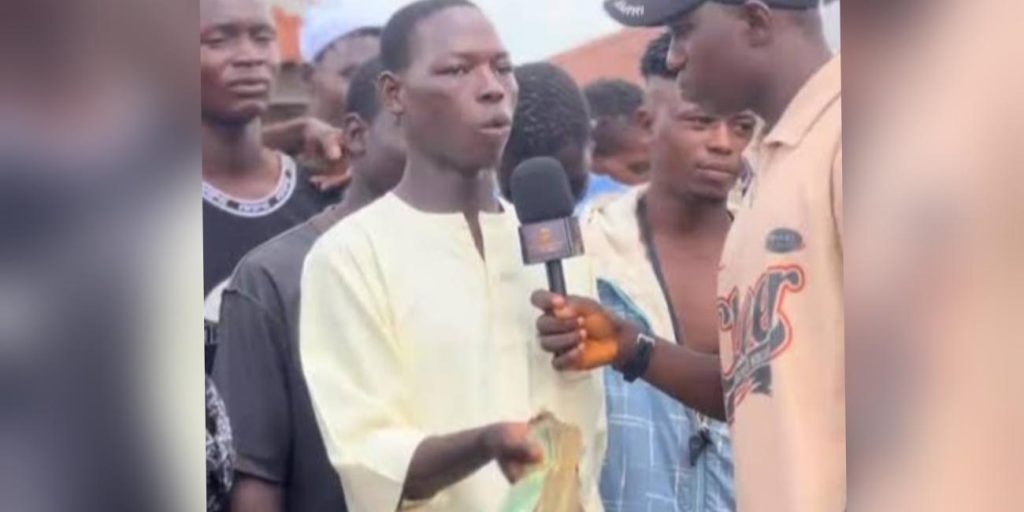
Families of some of the 37 suspected illegal miners who died in the custody of the Nigeria Security and Civil Defence Corps in Niger State have rejected a reported N100,000 payment from the state government, insisting that authorities must explain how their relatives died.

The families reportedly turned down the money, saying their immediate demand was for justice and accountability rather than financial assistance.

The deaths occurred after the men were arrested during an operation against illegal mining activities in Niger State on September 15 and 16.
According to reports, the detainees were taken into NSCDC custody in Minna after their arrests. They were among people apprehended as authorities intensified efforts to tackle illegal mining in the state.
The detainees subsequently died while in custody, leading to questions about what happened inside the detention facility and the circumstances surrounding their deaths.
The incident has since attracted public attention, protests and demands for an independent investigation, particularly because the deaths occurred while the victims were in the custody of a government security agency.
The exact cause of death has not been conclusively established.
The NSCDC had initially linked the deaths to a suspected disease outbreak, while subsequent reports indicated that medical and forensic examinations would be necessary to establish the actual cause.
The families have also raised concerns about the conditions in which their relatives were held, including allegations of overcrowding and inadequate ventilation. These allegations are among the issues that authorities are expected to examine as part of the investigation.
The reported N100,000 payment has now become a point of disagreement between some of the bereaved families and the authorities.
Some relatives reportedly argued that accepting the money could give the impression that the deaths had been settled through financial compensation.
They are instead asking the government to establish what happened to the detainees, determine whether there were failures in their treatment or supervision and identify anyone whose actions or negligence may have contributed to the deaths.
The families have also called for due process to be followed against anyone found responsible.
The controversy comes as a Federal Government-appointed committee investigates the incident.
The Minister of Interior, Olubunmi Tunji-Ojo, inaugurated a 10-member independent investigative committee on September 22 following a directive from President Bola Ahmed Tinubu.
The committee was set up to investigate the circumstances surrounding the deaths and make recommendations aimed at preventing a recurrence.
The government has said the investigation is expected to establish the root causes of the incident and provide a basis for appropriate action.
Personnel connected to the incident have also been suspended pending the outcome of the investigation.
The committee has commenced its work, with its secretary, Senior Advocate of Nigeria Isa Chiroma, saying members had held their first meeting and adopted a work plan for the inquiry.
The investigation is expected to examine the circumstances surrounding the arrests, the conditions in which the detainees were held, the events leading to their deaths and the conduct of personnel involved in their detention.
The incident has also prompted calls from civil society groups for independent investigations, autopsies and accountability.
Illegal mining has remained a major concern for authorities in Nigeria, with government agencies regularly carrying out operations against unlicensed mining activities. Such operations are intended to curb activities that authorities say can damage the environment, undermine regulated mining and deprive the government of revenue.
However, the deaths of the suspected miners while in custody have shifted attention from the illegal mining operation itself to questions about the treatment and safety of people detained by state authorities.
For the affected families, the central issue is now establishing how their relatives died and whether anyone should be held responsible.

More Stories
BELLS UNIVERSITY HOSTS ENGINEERING LEADERS AS OLUMAYOWA IDOWU LEADS AI-FOCUSED INDUCTION CEREMONY …To spotlight innovation, digital transformation and the future of engineering
Reliable energy, fundamental to industrialisation, employment generation – NSE
NORTHERN SENATORS FORUM CONDEMNS BINARI ATTACK,IN TARABA